

-
 March 2, 2026
 -
 One Comment
 -
 By
er.varunvohra
By
er.varunvohra


 By
By M.Tech in Mechanical and Automation Engineering – Course, Fees, Eligibility, Top Colleges, Top Careers
M.Tech in Mechanical and Automation Engineering – Course, Fees, Eligibility, Top Colleges, Top Careers
The landscape of engineering is in a constant state of flux, driven by technological advancements and evolving industrial demands. While traditional disciplines form the bedrock of engineering education, the future increasingly belongs to those who can bridge established principles with cutting-edge innovation. Mechanical Engineering, a discipline long synonymous with design, manufacturing, and systems, is now experiencing a profound transformation. This evolution is characterized by the integration of sophisticated automation, robotics, and intelligent control systems, giving rise to specialized fields like Mechanical and Automation Engineering. For aspiring engineers seeking to lead this charge, a Master of Technology (M.Tech) degree in Mechanical and Automation Engineering offers a potent pathway to advanced knowledge and impactful careers.
The Evolution of Engineering: Beyond Traditional Mechanical
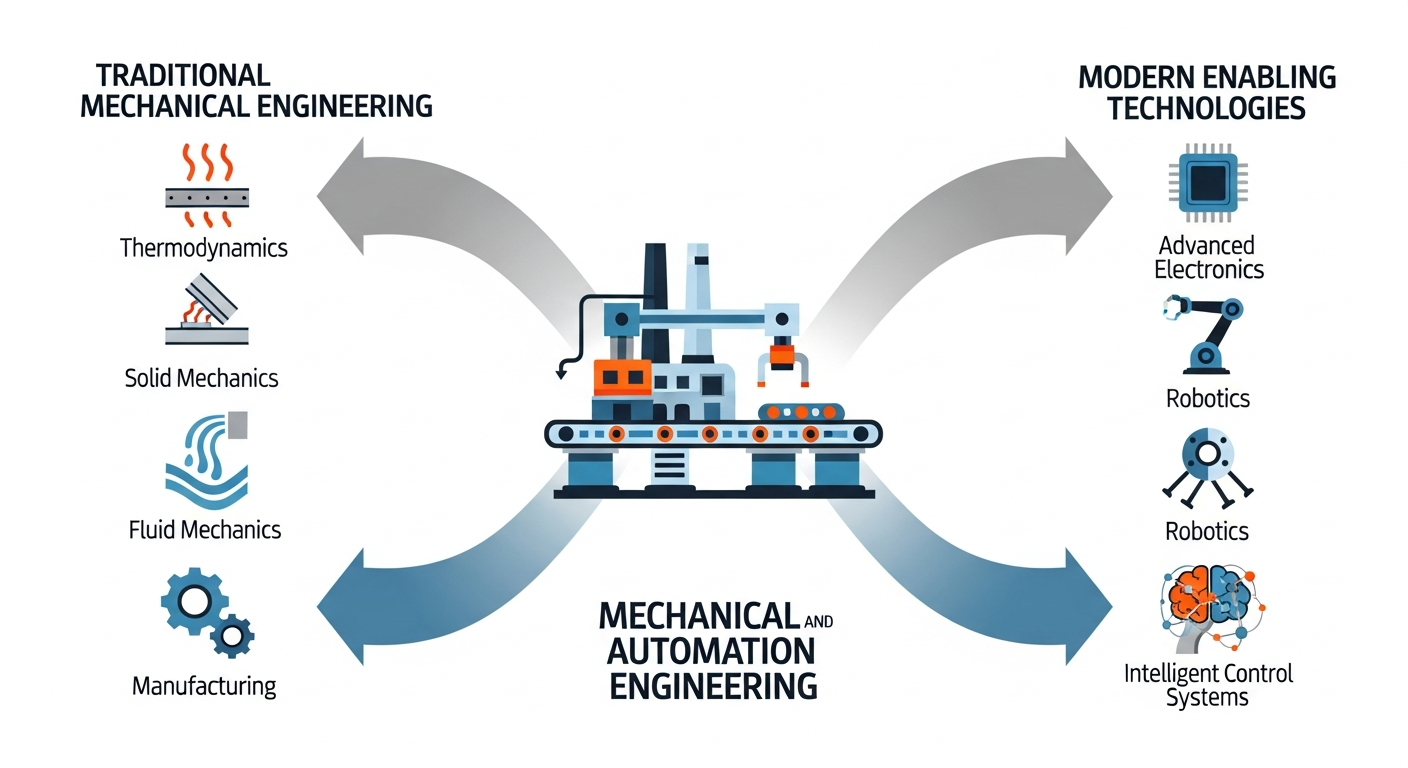 For decades, Mechanical Engineering has been the cornerstone of industrial development, focusing on fundamental principles such as Thermodynamics, Fluid Mechanics, Solid Mechanics, and Manufacturing Processes. Engineers in this field designed everything from engines and power plants to intricate machinery. However, the advent of digital technologies, advanced electronics, and computational power has fundamentally reshaped how mechanical systems are conceived, built, and operated. This convergence has blurred traditional disciplinary lines, necessitating a more integrated approach. The rise of Industrial Automation, where machines and software work collaboratively to perform tasks previously done by humans, is a prime example of this evolution. This shift is not merely about adding new tools; it’s about a paradigm change in how engineering problems are solved.
Why an M.Tech in Mechanical and Automation Engineering?
An M.Tech in Mechanical and Automation Engineering is designed to equip graduates with a unique blend of in-depth mechanical expertise and advanced automation proficiency. This specialization is crucial in an era increasingly defined by Industry 4.0, where smart factories, interconnected systems, and data-driven decision-making are paramount. By focusing on automation engineering, this postgraduate program prepares individuals to design, implement, and manage complex automated systems that enhance efficiency, productivity, and precision across various industries. It bridges the gap between the physical world of mechanical components and the digital realm of intelligent control and robotics, fostering innovation in a rapidly evolving technological landscape.
The Growing Demand in Industry 4.0
The global push towards Industry 4.0, often referred to as the fourth industrial revolution, is characterized by the fusion of the physical and digital worlds. This includes technologies like the Internet of Things (IoT), artificial intelligence (AI), cloud computing, and advanced robotics. These technologies are revolutionizing manufacturing, transforming industries like Automotive, Aerospace, and healthcare. Consequently, there is an unprecedented demand for engineers who possess a deep understanding of both traditional mechanical principles and the intricacies of modern automation. Graduates with an M.Tech in Mechanical and Automation Engineering are perfectly positioned to meet this demand, driving innovation and ensuring the efficient operation of advanced industrial systems.
Understanding the M.Tech in Mechanical and Automation Engineering Course
What is Mechanical and Automation Engineering at the Postgraduate Level?
At the postgraduate level, Mechanical and Automation Engineering delves deeper into the synergistic integration of mechanical systems with advanced automation technologies. It moves beyond the foundational principles of Mechanical Engineering to explore how electronics, microcontrollers, sensors, actuators, and sophisticated control systems can be combined with mechanical designs to create intelligent, autonomous, and highly efficient machinery and processes. This field is fundamentally about creating smarter, more adaptable, and more productive engineered solutions for a wide range of applications.
Core Objectives and Learning Outcomes
The primary objectives of an M.Tech in Mechanical and Automation Engineering program are to:
- Develop a comprehensive understanding of advanced mechanical design principles and manufacturing processes.
- Impart expertise in the design, implementation, and analysis of control systems and robotics.
- Foster the ability to integrate electronics and microcontrollers into mechanical systems for enhanced functionality.
- Equip students with the skills to manage and optimize complex industrial automation systems.
- Cultivate research capabilities in emerging areas of automation engineering.
- Prepare graduates to tackle real-world engineering challenges in sectors like Automotive and Aerospace.
Upon completion, students are expected to be adept at problem-solving, system design, critical analysis, and innovative application of automation technologies.
Advanced Curriculum: Key Subjects and Specializations
The curriculum typically comprises a blend of advanced Mechanical Engineering subjects and specialized automation engineering modules. Core mechanical areas often include advanced Thermodynamics, Fluid Mechanics, Solid Mechanics, and intricate Manufacturing Processes. Alongside these, students will dive deep into control systems, robotics, Industrial Automation, CAD/CAM for automated design, and the application of microcontrollers and control engineering principles. The interdisciplinary nature means that electronics and software integration are also key components.
Specialized Electives and Research Areas
To cater to diverse interests and industry needs, M.Tech programs often offer a range of specialized electives. These can include topics such as advanced robotics, AI in manufacturing, smart manufacturing systems, IoT for industrial applications, mechatronics, and advanced control engineering techniques. Research areas might focus on developing new robotic architectures, optimizing automated production lines, designing intelligent control algorithms, or exploring the application of automation in niche fields like Automotive or Aerospace engineering. A significant portion of the M.Tech program often involves a research project or thesis, allowing students to explore a specific area in depth.
Skills Developed During the M.Tech Program
Graduates of an M.Tech in Mechanical and Automation Engineering program gain a robust set of technical and soft skills. They develop proficiency in designing and analyzing complex mechanical systems, programming and controlling robotic devices, implementing industrial automation solutions, and working with various control systems and microcontrollers. Analytical and problem-solving skills are honed through tackling intricate engineering challenges. Furthermore, students often develop project management capabilities, teamwork, and the ability to innovate and adapt to new technological trends in automation engineering.
Eligibility Criteria and Admission Process for M.Tech
Essential Academic Qualifications
Typically, candidates aspiring to pursue an M.Tech in Mechanical and Automation Engineering must hold a Bachelor of Technology (B.Tech) or Bachelor of Engineering (B.E.) degree in a relevant discipline. This usually includes Mechanical Engineering, Mechanical and Automation Engineering, Mechatronics, or closely related fields. A minimum aggregate percentage, often around 60%, is usually required, though this can vary among institutions. Some engineering colleges may also consider candidates with a degree in electronics or computer science engineering who demonstrate a strong foundation in mechanical principles or a keen interest in automation engineering.
Key Entrance Examinations
Admission to M.Tech programs in India is largely based on performance in national or university-level entrance examinations. The Graduate Aptitude Test in Engineering (GATE) is a highly regarded examination for Mechanical Engineering and related fields, and scores from GATE are often a primary criterion for admission to many top institutions. Additionally, several leading engineering colleges conduct their own entrance tests or interviews to assess the aptitude and suitability of candidates for specialized postgraduate programs like Mechanical and Automation Engineering.
Application Procedure and Important Dates
The application process typically involves submitting an online application form, academic transcripts, and proof of identity. Candidates are usually required to upload scanned copies of their mark sheets, degree certificates, and entrance exam scorecards. Important dates for application submission, entrance exam registration, exam conduct, and result declarations are announced by the respective universities or examination conducting bodies well in advance. Prospective students are advised to regularly check the official websites of their target institutions for the most accurate and up-to-date information regarding admission cycles and deadlines.
M.Tech Course Duration and Fee Structure
Standard Course Duration: Two Years
The M.Tech in Mechanical and Automation Engineering program is generally structured over two academic years, divided into four semesters. This duration allows for comprehensive coverage of theoretical concepts, practical training, laboratory work, and the completion of a substantial research project or thesis, which is a hallmark of postgraduate engineering education. The two-year format ensures that students gain in-depth knowledge and practical experience in the complex field of automation engineering.
Understanding the Fee Landscape
The fee structure for M.Tech programs can vary significantly based on the institution. Government-funded institutions, such as Indian Institutes of Technology (IITs) and National Institutes of Technology (NITs), generally have lower tuition fees compared to private universities or autonomous engineering colleges. Fees typically cover tuition, laboratory charges, library access, and other academic amenities. For a general estimate, government institutes might charge anywhere from INR 20,000 to INR 1,00,000 per year, while private institutions can range from INR 1,00,000 to INR 4,00,000 or more per year. These figures are approximate and subject to change.
Scholarship Opportunities and Financial Aid
Numerous scholarship opportunities and financial aid options are available to meritorious students pursuing postgraduate studies. These can include government scholarships based on academic merit, category-based reservations, or need-based financial assistance. Many universities also offer their own scholarships or assistantships, often tied to performance in entrance exams or academic achievements. Research assistantships and teaching assistantships are common in government and leading private institutions, where students can earn a stipend by assisting faculty with research projects or teaching duties. Exploring these options can significantly reduce the financial burden of pursuing an M.Tech degree.
Top Colleges and Universities for M.Tech in Mechanical and Automation Engineering
Criteria for Selecting an M.Tech Institution
Choosing the right institution is paramount for a successful M.Tech journey. Key criteria include the faculty’s expertise and research background, the availability of state-of-the-art laboratories equipped for robotics, control systems, and industrial automation, the strength of industry collaborations, and the placement record of the institution. A strong curriculum that balances theoretical rigor with practical application, particularly in areas like automation engineering and Mechanical Engineering fundamentals, is also crucial. The institute’s location and its proximity to industrial hubs can also offer significant advantages for internships and future employment.
Leading Institutions in India (Examples for depth, actual specific names would be researched for the article)
Several premier engineering colleges and universities across India offer specialized M.Tech programs in Mechanical and Automation Engineering or closely related fields. Institutions like the Indian Institutes of Technology (IITs) known for their robust Mechanical Engineering departments, and specific NITs often provide strong programs with excellent research facilities. Additionally, numerous other reputable universities and autonomous institutions have established strong departments focusing on automation engineering, robotics, and advanced manufacturing. Prospective students should thoroughly research the specific specializations and faculty research interests at each institution to find the best fit.
Importance of Research and Project Opportunities
The M.Tech program is designed to foster research aptitude. Institutions that offer ample opportunities for students to engage in cutting-edge research projects, particularly in areas like advanced robotics, intelligent control systems, and Industrial Automation, provide a significant advantage. Hands-on experience with real-world problems, often through collaboration with industry partners, allows students to apply their theoretical knowledge and develop practical skills. These research and project opportunities are critical for building a strong portfolio, gaining specialized knowledge, and preparing for careers in research and development or advanced engineering roles.
Career Prospects and Top Job Roles After M.Tech
Why an M.Tech Accelerates Your Career Growth
Pursuing an M.Tech in Mechanical and Automation Engineering significantly accelerates career growth by providing specialized knowledge and advanced skills that are in high demand. This postgraduate degree equips individuals with a deeper understanding of complex systems, problem-solving capabilities, and leadership potential. It often leads to higher starting salaries, faster promotions, and access to more challenging and rewarding roles compared to those with a bachelor’s degree alone. The ability to innovate and implement advanced automation engineering solutions makes graduates invaluable assets to organizations.
Diverse Industry Sectors Employing M.Tech Graduates
Graduates of this M.Tech program are sought after by a wide array of industries. The Automotive sector relies heavily on automation for manufacturing and vehicle control systems. The Aerospace industry utilizes advanced automation for aircraft design, manufacturing, and control. The broader manufacturing sector, including heavy machinery, consumer goods, and electronics production, is increasingly adopting sophisticated industrial automation for efficiency and precision. Other significant sectors include robotics, automation technology providers, research and development organizations, energy, and even healthcare, where automation plays a vital role in medical devices and systems.
High-Demand Job Titles for M.Tech Graduates
The specialized knowledge gained in Mechanical Engineering and automation engineering opens doors to numerous high-demand job titles. These include:
- Automation Engineer: Designing, implementing, and maintaining automated systems.
- Robotics Engineer: Developing, programming, and deploying robots in various applications.
- Control Systems Engineer: Designing and optimizing control algorithms and systems.
- Manufacturing Engineer: Improving manufacturing processes, often through automation and CAD/CAM.
- Project Manager (Automation): Overseeing the planning and execution of automation projects.
- R&D Engineer: Conducting research and developing new technologies in mechanical and automation fields.
- Mechatronics Engineer: Integrating mechanical, electronic, and software engineering principles.
- Industrial Automation Specialist: Focusing on the automation of industrial processes.
Confused?
Clear Your Career Confusion With Our Expert Counsellor
Future Scope and Emerging Trends in Mechanical and Automation Engineering
Industry 4.0 and Beyond: The Future of Automation
The future of Mechanical and Automation Engineering is inextricably linked with the continued evolution of Industry 4.0 and the emergence of Industry 5.0, which emphasizes human-centric and sustainable automation. Trends like AI-driven manufacturing, advanced robotics (including collaborative robots or cobots), the Industrial Internet of Things (IIoT), digital twins, and predictive maintenance are shaping the field. Graduates will be at the forefront of developing and implementing these technologies, creating smarter, more flexible, and more efficient industrial ecosystems. Expertise in areas like machine learning, data analytics, and advanced control engineering will be increasingly critical.
Sustainable and Green Automation Solutions
A significant emerging trend is the focus on sustainability and green automation. This involves designing automated systems that are energy-efficient, minimize waste, and reduce environmental impact. M.Tech graduates will play a key role in developing eco-friendly manufacturing processes, optimizing resource utilization through automation, and creating systems that contribute to a circular economy. This requires a deep understanding of both mechanical principles and the application of technology to achieve environmental goals.
Conclusion
An M.Tech in Mechanical and Automation Engineering represents a strategic investment for individuals aspiring to lead in the technologically advanced engineering landscape of the 21st century. By seamlessly integrating the foundational strengths of Mechanical Engineering with the cutting-edge capabilities of automation, robotics, and control systems, this program offers unparalleled career prospects. Graduates are poised to drive innovation in critical sectors like manufacturing, Automotive, and Aerospace, tackling complex challenges with sophisticated solutions. The demand for skilled professionals in automation engineering is projected to grow exponentially, making this specialization a highly rewarding and future-proof career choice. Prospective students are encouraged to thoroughly research leading engineering colleges, understand the admission requirements, and prepare for a transformative educational journey that will empower them to engineer the future.