

-
 February 28, 2026
 -
 6 Comments
 -
 By
er.varunvohra
By
er.varunvohra


 By
By MBA Systems Management – Course, Fees, Eligibility, Top Colleges, Top Careers
MBA Systems Management – Course, Fees, Eligibility, Top Colleges, Top Careers
In today’s rapidly evolving business landscape, the integration of technology and strategic management is no longer a niche pursuit but a core necessity for organizational success. As businesses increasingly rely on sophisticated IT systems and digital platforms, the demand for professionals who can effectively manage and optimize these resources has never been higher. An MBA in Systems Management emerges as a pivotal degree for individuals aiming to bridge the gap between technical expertise and strategic business leadership, steering organizations through the complexities of digital transformation. This comprehensive guide explores the ins and outs of pursuing an MBA in Systems Management, detailing its curriculum, eligibility, costs, top institutions, and the promising career paths it unlocks.
1 The Crucial Role of Systems Management in Today’s Digital Economy
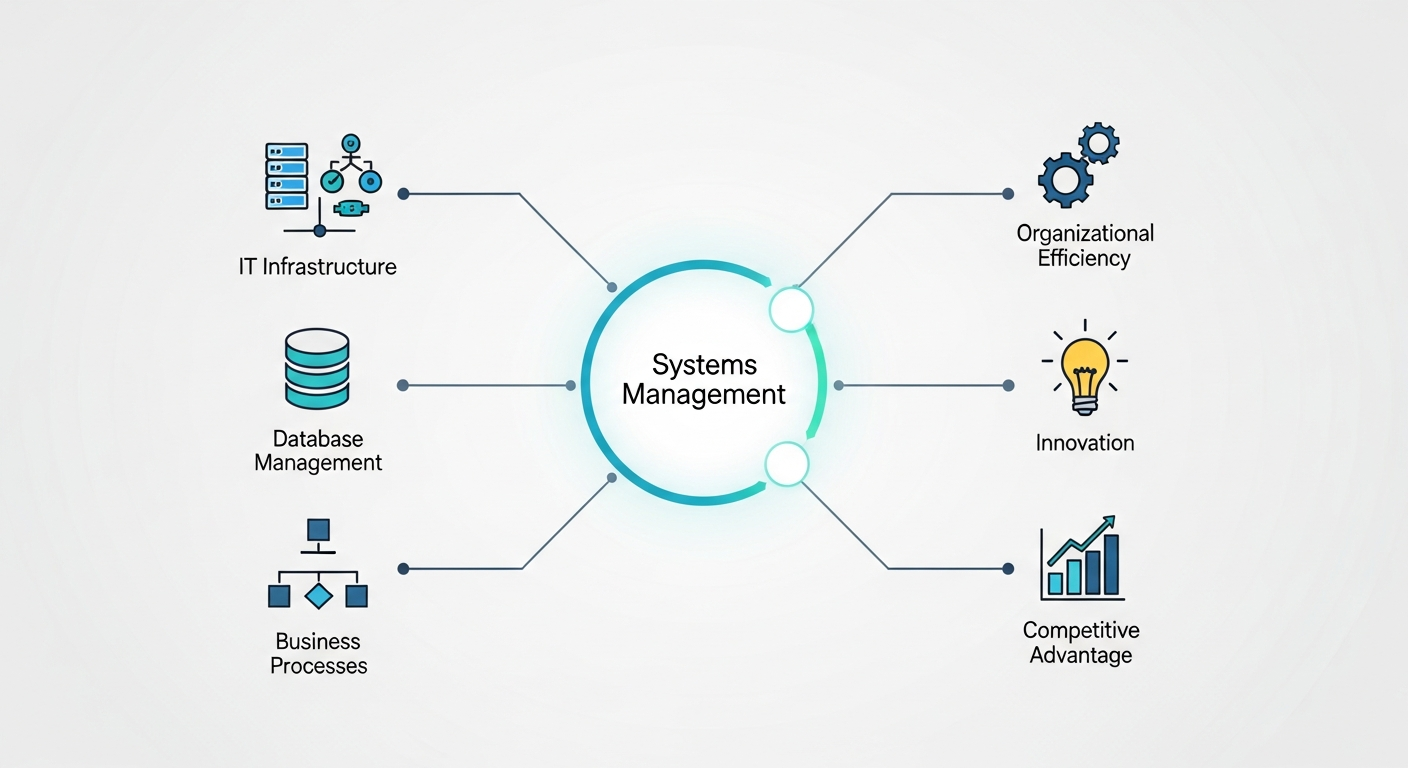 Systems Management strategically aligns an organization’s technological components with its core business objectives to drive performance and growth.
The modern economy is intrinsically linked to technology. From intricate IT infrastructure to vast database management systems, every facet of business operation relies on robust and efficient systems. Systems Management is the discipline dedicated to overseeing these interconnected components, ensuring they align with strategic business objectives, operate optimally, and facilitate seamless business processes. In an era characterized by rapid technological advancement, fierce competition, and the imperative for agility, effective Systems Management is the bedrock upon which organizational efficiency, innovation, and competitive advantage are built. It’s about more than just maintaining hardware and software; it’s about architecting and governing the very technological backbone that drives an organization’s performance and future growth.
2 Who is This MBA For? (Target Audience)
An MBA in Systems Management is ideally suited for professionals who seek to deepen their understanding of how technology drives business strategy and operations. This includes IT professionals looking to move into management roles, aspiring Systems Analyst professionals, project managers, and business leaders aiming to leverage technology more effectively. It is also beneficial for individuals from non-technical backgrounds who wish to gain a comprehensive understanding of Information Systems and their strategic application within an organization, particularly in sectors like E-Commerce or production where technological efficiency is paramount.
3 What You Will Discover in This Comprehensive Guide
This guide offers an in-depth exploration of the MBA in Systems Management. We will demystify the core concepts of Systems Management, detailing its key pillars and the essential skills it cultivates. You will gain insights into the typical curriculum, including foundational business subjects and specialized areas. Furthermore, we will outline the eligibility criteria, discuss the financial investment and funding options, highlight top academic institutions, and provide an overview of the lucrative career opportunities awaiting graduates. Finally, we will explore the growing prominence of Online MBA and Distance MBA formats in this field.
Understanding MBA Systems Management: Bridging Technology and Business Strategy
1 Defining MBA Systems Management: More Than Just IT
An MBA in Systems Management is a specialized postgraduate program that equips individuals with the knowledge and skills to manage and optimize complex organizational systems. It transcends a narrow focus on mere Information Technology or IT infrastructure management. Instead, it adopts a holistic perspective, integrating technological components with overall business management principles. This program focuses on how to design, implement, and manage integrated systems – encompassing everything from software and hardware to data flow and business processes – to achieve strategic organizational goals. It emphasizes the strategic application of Information Systems to enhance operational efficiency, drive innovation, and support digital transformation initiatives.
2 Core Pillars of Systems Management
Effective Systems Management rests on several critical pillars. These include the strategic planning and oversight of IT infrastructure, ensuring its reliability, scalability, and security. Information Systems design and implementation involve creating and deploying technological solutions that support business functions. Business Process Optimization is crucial, focusing on analyzing, streamlining, and improving business processes through technological integration. Project Management, particularly in the context of IT initiatives, ensures that systems are developed and deployed on time and within budget. Furthermore, robust data management and analytics are essential for informed decision-making, while a strategic approach to digital transformation guides the organization’s technological evolution.
3 Key Skills Developed: A Blend of Technical Acumen and Leadership
The MBA in Systems Management cultivates a potent blend of technical proficiency and leadership capabilities. Graduates develop strong analytical and problem-solving skills through systems analysis and systems management methodologies. They gain expertise in understanding and managing diverse IT systems, including database management and network administration. Crucially, they hone their strategic thinking, leadership, and communication skills, enabling them to manage cross-functional teams, navigate organizational change, and effectively articulate technological strategies to stakeholders. This dual skillset positions them as invaluable assets capable of translating complex technical concepts into actionable business strategies.
MBA Systems Management Course Details & Curriculum
1 Program Structure and Innovative Learning Methodologies
MBA Systems Management programs are typically offered in full-time, part-time, and increasingly, Online MBA or Distance MBA formats, catering to diverse student needs. The program structure often involves a combination of core business courses and specialized Systems Management subjects. Learning methodologies are designed to be interactive and practical. They frequently incorporate case studies, simulations, group projects, and capstone projects that require students to apply their knowledge to real-world business challenges, particularly in areas like E-Commerce or optimizing production processes.
2 Foundational Core Subjects
The foundational core of an MBA Systems Management curriculum ensures a strong grounding in essential business management principles. These typically include subjects like Financial Accounting, Managerial Economics, Marketing Management, Operations Management, Human Resource Management, Organizational Behavior, and Business Statistics. These courses provide a broad understanding of how different business functions operate and interact, which is vital for integrating technological solutions effectively across the enterprise.
3 Advanced Specializations and Electives for Modern Challenges
Beyond the core, the curriculum delves into specialized areas pertinent to Systems Management. Core subjects often include Information Technology Management, Information Systems Design and Development, IT Infrastructure Management, Database Management, and Project Management. Advanced electives can explore areas such as Enterprise Resource Planning (ERP) systems, E-Commerce strategies, Cybersecurity, Big Data Analytics, Cloud Computing, and Digital Transformation. These specialized courses prepare students to tackle contemporary challenges and leverage emerging technology.
Eligibility Criteria for MBA Systems Management
1 Academic Requirements
Candidates seeking admission to an MBA Systems Management program typically require a bachelor’s degree from a recognized university. While a technical background in fields like engineering, computer science, or IT is often advantageous, many programs welcome graduates from diverse academic disciplines, provided they demonstrate strong analytical abilities and a keen interest in technology and business. Minimum aggregate marks or a specific GPA are usually stipulated by institutions.
2 Work Experience (Not always mandatory, but often preferred)
While some MBA Systems Management programs do not mandate prior work experience, most reputable institutions prefer candidates with at least a few years of professional experience. This is especially true for full-time programs, as work experience enriches classroom discussions and provides a practical context for learning. For professionals seeking career advancement or a pivot into Systems Management, relevant experience in IT, operations, or project management can significantly strengthen their application.
3 Entrance Exams and Selection Process
Admission to top MBA programs, including those with a Systems Management specialization, typically requires candidates to clear competitive entrance examinations. Common exams include the CAT (Common Admission Test), GMAT (Graduate Management Admission Test), XAT (Xavier Aptitude Test), and sometimes university-specific aptitude tests. The selection process usually involves multiple stages, including the entrance exam score, followed by group discussions (GD) and personal interviews (PI) to assess a candidate’s suitability, communication skills, and leadership potential.
Fees and Financial Investment for an MBA in Systems Management
1 Overview of Program Fees
The financial investment for an MBA in Systems Management can vary significantly based on the institution’s reputation, program format (full-time, part-time, online), and duration. Top-tier business schools generally command higher fees. Online MBA and Distance MBA programs tend to be more affordable than their full-time, on-campus counterparts, making them an accessible option for working professionals.
2 Breakdown of Costs (Tuition, study materials, exam fees, etc.)
The primary cost component is tuition. In addition to tuition, prospective students should budget for study materials, textbooks, potential examination fees for specific certifications, application fees, and living expenses if pursuing a full-time, residential program. Miscellaneous costs might include case study subscriptions, software licenses for specific courses, and networking event participation.
3 Funding Your MBA: Loan and Scholarship Options
Several avenues exist to finance an MBA in Systems Management. Educational loans from banks and financial institutions are a common option. Many universities offer merit-based scholarships for academically outstanding students, and some may provide need-based financial aid. Corporate sponsorships or employer-sponsored educational programs can also be explored by working professionals. Researching available scholarships and loan schemes well in advance of admission is advisable.
Top Colleges and Universities for MBA Systems Management
1 What Defines a Leading Institution for Systems Management?
A leading institution for an MBA in Systems Management is characterized by several factors beyond just rankings. It should possess a strong faculty with expertise in both business management and Information Systems, a curriculum that is regularly updated to reflect industry trends in technology and digital transformation, robust industry connections for internships and placements, and a proven track record of producing successful graduates in roles like Systems Analyst or IT management. Accreditation and a strong alumni network are also key indicators of quality.
2 Prominent Institutions Offering MBA Systems Management in India
While dedicated “MBA Systems Management” programs might be structured as specializations within broader MBA offerings at many top Indian B-schools, several institutions are renowned for their strengths in Information Technology and Management. These include institutions like the Indian Institutes of Management (IIMs) across various campuses (offering specializations in IT or Operations Management with a strong systems component), XLRI, SPJIMR, ISB, and others that offer MBA programs with significant IT and Systems focus. For Online MBA and Distance MBA options, institutions like IGNOU, NMIMS Global Access, Amity University Online, and Symbiosis Centre for Distance Learning are prominent.
3 Strategic Checklist for Evaluating Programs (Beyond Just Rankings)
When evaluating programs, look beyond superficial rankings. Consider the specific modules offered within the curriculum, particularly concerning IT infrastructure, database management, Enterprise Resource Planning, and E-Commerce. Assess the faculty’s research areas and industry experience. Investigate the career services department’s effectiveness in placing graduates in Systems Management roles. Understand the learning methodology – the emphasis on case studies, practical projects, and industry exposure. Also, consider the campus culture and the strength of the alumni network in your desired field.
Online and Distance MBA Systems Management: Flexibility and Accessibility
1 Benefits of Flexible Learning Formats
Online MBA and Distance MBA programs in Systems Management offer unparalleled flexibility, allowing professionals to upskill without career interruption. These formats democratize access to quality education, enabling individuals to study from anywhere at their own pace. They are often more cost-effective than traditional on-campus programs, and the self-paced nature fosters strong self-discipline and time management skills, essential for effective Systems Management.
2 Program Delivery and Student Support
These flexible programs utilize sophisticated Learning Management Systems (LMS), virtual classrooms, pre-recorded lectures, and online discussion forums. While physical interaction is limited, robust student support systems are in place. This typically includes dedicated academic advisors, technical support, online library access, virtual career services, and opportunities for online networking with peers and faculty. The delivery ensures that the curriculum is effectively conveyed, even without a physical classroom.
3 Considerations for Choosing an Online/Distance Program
Prospective students must possess strong self-motivation and time management skills to thrive in Online MBA or Distance MBA programs. It’s crucial to research the accreditation of the institution and the program’s recognition by employers. Evaluate the faculty’s credentials and the platform’s user-friendliness. Understand the extent of peer interaction and networking opportunities available. Ensure the program adequately covers crucial areas like Systems Analysis, IT Systems, and digital transformation strategy.
Top Career Opportunities and Future Scope in Systems Management
1 The Dynamic Landscape
The demand for skilled Systems Management professionals is exceptionally high and projected to grow significantly. This is driven by continuous digital transformation, the proliferation of data, the adoption of cloud computing, and the increasing complexity of IT infrastructure. Organizations across all sectors recognize the strategic importance of efficiently managing their technology resources to remain competitive.
2 Key Job Roles
Graduates with an MBA in Systems Management are well-prepared for a variety of leadership and analytical roles. Prominent positions include Systems Analyst, IT Manager, Information Systems Manager, IT Project Manager, ERP Consultant, Business Process Manager, Digital Transformation Lead, Data Manager, and IT Infrastructure Manager. These roles require individuals to understand both the technical capabilities of technology and the strategic needs of the business.
3 Career Progression and Salary Expectations
Career paths in Systems Management offer significant growth potential. Entry-level roles such as Junior Systems Analyst or IT Coordinator can evolve into mid-level positions like Systems Manager or Project Manager within a few years. With experience and further specialization, professionals can ascend to senior leadership roles such as Director of IT, Chief Information Officer (CIO), or Chief Technology Officer (CTO). Salary expectations are competitive and increase substantially with experience and responsibility, often ranging from moderate entry-level salaries to six-figure incomes for senior roles.
Confused?
Clear Your Career Confusion With Our Expert Counsellor
Conclusion
An MBA in Systems Management represents a strategic investment for ambitious professionals seeking to navigate and lead in the digital age. It equips individuals with the critical blend of technical understanding and business acumen necessary to manage complex IT systems, optimize business processes, and drive successful digital transformation. From understanding the intricate details of IT infrastructure and database management to strategically implementing Enterprise Resource Planning solutions and leveraging E-Commerce opportunities, this degree prepares graduates for a dynamic and rewarding career. Whether pursued through traditional full-time programs or flexible Online MBA and Distance MBA formats, an MBA in Systems Management offers a clear pathway to accelerated career growth, leadership roles, and the ability to shape the technological future of organizations. Aspiring candidates should carefully assess their career goals, research programs that align with their interests, and prepare for the rigorous yet ultimately rewarding journey of mastering the science of Systems Management.
Frequently Asked Questions (FAQs)
Is an MBA in Systems Management worth it for non-technical graduates? Absolutely. While a technical background can be beneficial, the program is designed to build foundational IT knowledge for graduates from any discipline, focusing on the strategic application of technology in business.
What is the difference between an MBA in Systems Management and an MBA in Information Technology? An MBA in Information Technology often has a deeper technical focus. MBA Systems Management typically offers a broader perspective, integrating IT with overall business strategy, operations, and business processes, with roles like Systems Analyst being a common outcome.
What are the essential skills to develop for a career in Systems Management? Key skills include systems analysis, strategic thinking, leadership, problem-solving, database management knowledge, project management, understanding of IT infrastructure, and strong communication abilities.
How does an MBA in Systems Management prepare for Digital Transformation roles? The curriculum specifically covers principles of digital transformation, change management, and the strategic deployment of technology and Information Systems, making graduates ideal candidates for leading such initiatives.