

-
 March 18, 2026
 -
 7 Comments
 -
 By
er.varunvohra
By
er.varunvohra


 By
By How to become a Quality Control Manager Overview, Courses, Exam, Colleges, Pathways, Salary
How to become a Quality Control Manager Overview, Courses, Exam, Colleges, Pathways, Salary
Introduction: Safeguarding Quality in Every Product
In today’s competitive global market, the unwavering commitment to quality is not merely a desirable attribute; it is a fundamental necessity for business survival and growth. Consumers demand reliability, safety, and performance, while regulatory bodies impose stringent standards. At the heart of this critical function lies the Quality Control Manager (QC Manager), a pivotal figure responsible for upholding these exacting benchmarks across all stages of production and service delivery. This role is dynamic, demanding a blend of technical acumen, leadership prowess, and strategic vision. As industries increasingly recognize that superior quality directly correlates with customer satisfaction, reduced costs, and enhanced brand reputation, the importance of effective quality management has never been more pronounced. In fact, 98% of US manufacturing businesses believe quality is as important as ever, or more so, with a significant portion planning to increase their quality budgets. This article serves as a comprehensive guide, detailing the educational pathways, essential skills, career progression, and professional development required to excel as a Quality Control Manager.
The Critical Role of a Quality Control Manager
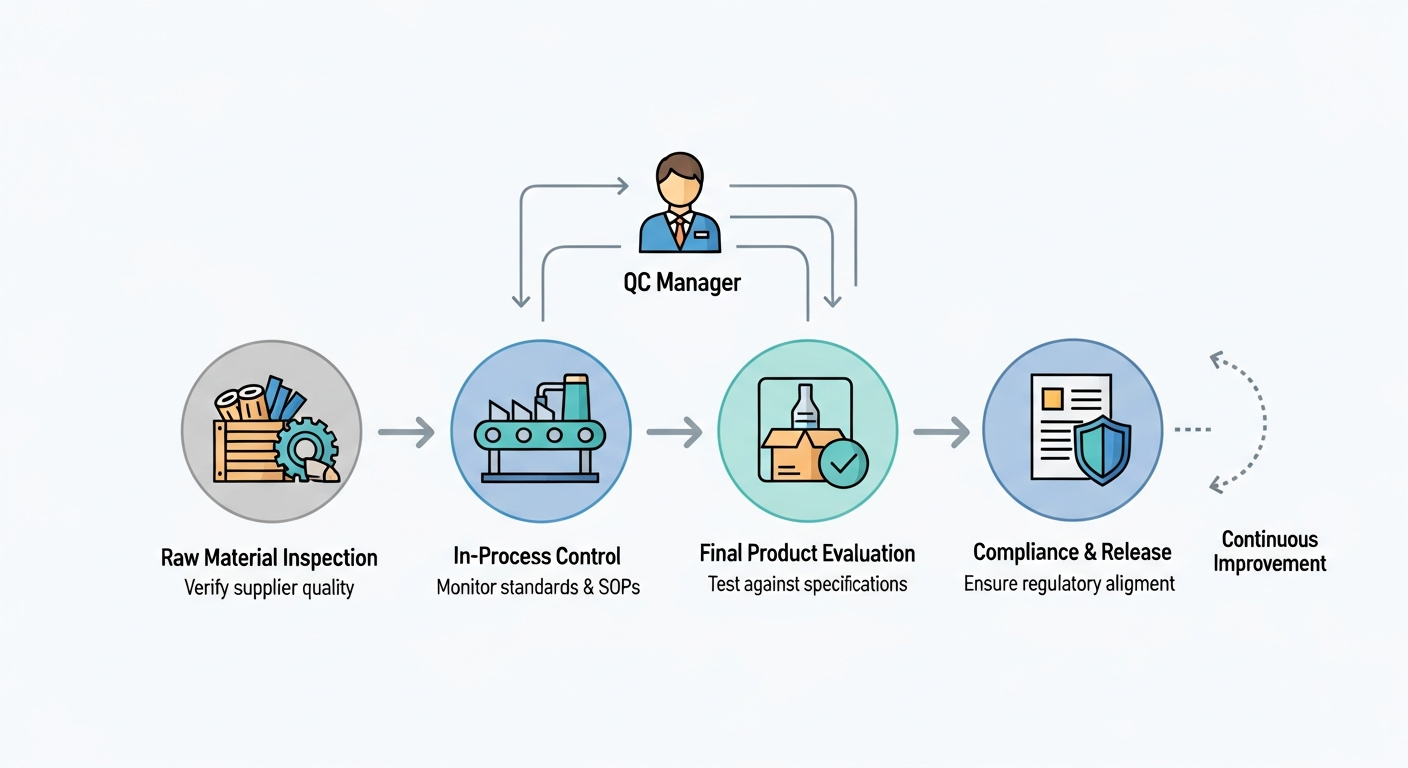 The Quality Control Manager’s purview extends across the entire production lifecycle, from initial materials to final compliance.
The Quality Control Manager is the architect and guardian of an organization’s quality assurance framework. This professional oversees the systems and processes designed to ensure that products and services meet predefined standards of excellence. Their purview extends from the meticulous inspection of raw materials and components to the final evaluation of finished goods before they reach the customer. Beyond mere inspection, the QC Manager is instrumental in developing, implementing, and refining quality management systems. These systems are the backbone of consistent quality, encompassing everything from standard operating procedures to detailed quality documentation and comprehensive quality assurance manuals. Ultimately, the QC Manager’s efforts are aimed at preventing defects, mitigating risks, and ensuring that every product leaving a facility aligns with both internal quality standards and external regulatory compliance requirements.
Why Quality Management is More Important Than Ever
The landscape of modern business is characterized by complex supply chains, rapidly evolving consumer expectations, and an increasingly interconnected global economy. In this environment, the consequences of quality failures can be catastrophic. Consider the food and beverage industry, where 73% of companies experienced a product recall in the past five years, with many facing millions in costs. These stark realities underscore the indispensable role of robust quality management. Beyond averting financial and reputational damage, a strong quality assurance program is a powerful driver of customer satisfaction and loyalty. Companies that consistently deliver high-quality products build trust and a competitive edge. Furthermore, evolving regulations in sectors like pharmaceuticals, automotive, and technology demand rigorous adherence, making compliance a non-negotiable aspect of operations. The increasing skills gap, with 70% of corporate leaders reporting a critical skills gap that negatively impacts business performance, further highlights the demand for skilled professionals who can implement and manage effective quality control systems.
What This Guide Will Cover: Your Comprehensive Roadmap
This guide is designed to provide aspiring and current professionals with a thorough understanding of the journey to becoming a successful Quality Control Manager. We will explore the foundational role of the QC Manager, detailing their core responsibilities and the essential skills required for success. The article will then delve into the educational pathways, outlining necessary degrees, specialized courses, and valuable certifications. We will also navigate the landscape of colleges and educational programs, offering insights into selection criteria and the advantages of online learning. Furthermore, this guide will map out various career pathways and progression routes into management. For those seeking professional accreditation, we will examine what to expect from Quality Control Manager exams and effective preparation strategies. Finally, we will touch upon salary expectations and the outlook for this vital profession.
Understanding the Quality Control Manager Role
What Exactly is a Quality Control Manager?
A Quality Control Manager, often abbreviated as QC Manager, is a professional responsible for establishing and maintaining the quality of products or services within an organization. This role is central to ensuring that all outputs meet established quality standards, regulatory requirements, and customer expectations. The QC Manager works within the broader framework of quality management and quality assurance, acting as a critical link between production, product development, and the end consumer. They are tasked with designing, implementing, and overseeing quality control systems that are both effective and efficient, minimizing defects and enhancing overall product reliability.
Core Responsibilities and Day-to-Day Tasks
The daily activities of a Quality Control Manager are diverse and impactful, revolving around the meticulous oversight of quality processes. Key responsibilities include:
- Developing and Implementing Quality Systems: Creating, documenting, and embedding comprehensive quality systems, including standard operating procedures (SOPs) and quality assurance manuals.
- Product Testing and Inspection: Designing and supervising rigorous product testing protocols for raw materials, in-process materials, and finished goods. This involves utilizing various product testing methodologies to identify deviations from quality standards.
- Auditing and Compliance: Conducting regular internal audits to assess adherence to quality standards and regulatory requirements. The QC Manager ensures that all operations are in compliance with industry-specific regulations and international quality standards like ISO 9001.
- Process Improvement: Analyzing quality data to identify trends, root causes of defects, and areas for improvement within production and manufacturing processes.
- Team Leadership and Training: Managing and mentoring a team of quality control technicians and inspectors. This includes providing essential training to ensure consistent application of quality procedures and standards.
- Supplier Quality Management: Collaborating with suppliers to ensure the quality of incoming raw materials and components.
- Problem Resolution: Investigating quality issues, customer complaints, and non-conformances, and implementing corrective and preventive actions (CAPA).
- Quality Documentation: Maintaining meticulous records of all quality-related activities, inspections, tests, and audits.
Essential Skills and Attributes for Success in Quality Control Management
Technical and Analytical Expertise
A successful Quality Control Manager possesses a strong foundation in technical and analytical skills. This includes a deep understanding of quality management principles, statistical process control (SPC), and various product testing methodologies. The ability to interpret complex data, perform root cause analysis, and understand the intricacies of manufacturing or production processes is paramount. Familiarity with quality control systems, compliance regulations, and industry-specific quality standards is also critical. This technical proficiency allows the QC Manager to effectively design, implement, and monitor quality initiatives, ensuring that quality documentation and standard operating procedures are both robust and practical.
Managerial and Interpersonal (Soft) Skills
Beyond technical prowess, effective leadership and interpersonal skills are vital for a QC Manager. The role demands the ability to lead and motivate a team, foster a culture of quality throughout the organization, and communicate complex quality concepts clearly to diverse stakeholders, including senior management, production teams, and external auditors. Strong problem-solving and decision-making abilities are essential for addressing quality issues swiftly and effectively. Negotiation skills are useful when interacting with suppliers, and the capacity to influence others towards adopting quality-centric practices is a hallmark of a seasoned QC Manager. These soft skills enable the QC Manager to translate technical quality requirements into actionable strategies that drive organizational excellence and ultimately enhance customer satisfaction.
Educational Foundations: Degrees and Academic Prerequisites
The Foundational Importance of a Bachelor’s Degree
A bachelor’s degree typically serves as the bedrock for a career in quality control management. While specific fields of study can vary, degrees in engineering (e.g., Industrial Engineering, Mechanical Engineering, Chemical Engineering), quality assurance, statistics, or business administration with a focus on operations management are highly regarded. These programs provide the foundational knowledge in scientific principles, analytical techniques, and business processes necessary to understand and manage quality systems. For instance, an engineering background equips individuals with the understanding of manufacturing processes, while a statistics degree provides the analytical tools crucial for quality control. This academic preparation is essential for understanding quality standards and implementing effective quality control systems.
Advanced Degrees for Specialization and Leadership
For those aspiring to senior leadership roles or seeking to specialize in niche areas of quality management, pursuing advanced degrees can be highly beneficial. A Master of Science (MS) or Master of Business Administration (MBA) with a concentration in quality management, operations, or supply chain management can provide deeper insights into strategic quality initiatives, advanced statistical methods, and leadership development. These advanced studies prepare individuals for more complex roles, such as overseeing quality assurance for an entire enterprise or driving strategic quality improvements that have a significant impact on business performance. Advanced degrees also signal a commitment to the field and can position individuals for higher-level management and executive opportunities within organizations.
Courses and Specialized Certifications for Aspiring QC Managers
Foundational Quality Management Coursework
Aspiring Quality Control Managers benefit significantly from specialized coursework that deepens their understanding of quality principles and practices. Core curriculum typically includes subjects such as Introduction to Quality Management, Statistical Process Control (SPC), Quality Tools and Techniques, Quality Assurance Principles, and Reliability Engineering. Courses focusing on regulatory compliance and quality documentation are also essential. Many universities and professional organizations offer certificate programs in quality management, providing focused, practical knowledge that complements a traditional degree. These courses often cover the creation and maintenance of quality assurance manuals and standard operating procedures, which are cornerstones of any robust quality system.
Industry-Specific and Advanced Technical Courses
Beyond general quality management, specialized courses tailored to specific industries are invaluable. For example, professionals in the pharmaceutical or medical device sectors might pursue courses in Good Manufacturing Practices (GMP), ISO 13485, or regulatory affairs. Those in the automotive industry might focus on IATF 16949 standards. Advanced technical courses can cover areas like Six Sigma methodologies (Yellow, Green, Black Belt training), Lean Manufacturing principles, Six Sigma’s focus on defect reduction, and advanced product testing techniques. These courses enhance a QC Manager’s ability to apply quality principles effectively within their specific operational context, ensuring compliance and optimizing production.
Key Certifications and Their Strategic Value
Professional certifications offer a recognized validation of expertise and can significantly enhance career prospects for Quality Control Managers. Organizations like the American Society for Quality (ASQ) offer numerous certifications, including Certified Quality Manager (CQM) and Certified Quality Engineer (CQE). Other valuable certifications include those related to Six Sigma, such as Certified Six Sigma Black Belt. These credentials demonstrate a commitment to professional development and a mastery of quality principles and practices. Holding relevant certifications often makes candidates more attractive to employers and can lead to higher salary potential. They signify an individual’s ability to implement and manage effective quality systems, drive compliance, and improve overall product quality.
Navigating Colleges and Educational Programs for QC Management
Criteria for Choosing the Right Academic Institution
Selecting an appropriate college or university program is a critical step in building a career as a Quality Control Manager. Key criteria include the program’s accreditation, the faculty’s industry experience, and the curriculum’s relevance to current industry needs. Look for programs that offer hands-on learning opportunities, such as internships or co-op placements, which provide practical experience in real-world quality control environments. The institution’s reputation, particularly within the manufacturing and quality assurance sectors, can also be a significant factor. Consider the availability of specialized tracks or concentrations that align with your career interests and the program’s alumni network, which can be a valuable resource for career advancement.
Leveraging Online Learning and Continuing Education
In today’s flexible educational landscape, online learning and continuing education platforms offer accessible and efficient ways to acquire the knowledge and skills needed for quality control management. Many reputable universities and professional organizations provide online degree programs, certificate courses, and individual training modules. These options are ideal for individuals who are already employed or have other commitments, allowing them to learn at their own pace and on their own schedule. Online courses can cover a wide range of topics, from foundational quality principles and product testing to advanced compliance strategies and the development of quality documentation. Embracing continuous learning through these platforms is crucial, especially as 40% of the current skill requirements in advanced manufacturing are expected to evolve over the next five years.
Career Pathways and Progression to Quality Control Manager
Entry-Level Roles: Building Your Foundation
The journey to becoming a Quality Control Manager typically begins with entry-level positions in quality assurance or quality control departments. Roles such as Quality Technician, QC Inspector, or Quality Assurance Specialist provide hands-on experience with product testing, inspection, data collection, and adherence to standard operating procedures. These positions are fundamental for understanding the practical application of quality standards and the daily operations of a quality department. Gaining experience in these roles allows individuals to develop a strong foundational knowledge of quality control systems and processes, setting the stage for future advancement.
Mid-Level Advancement and Specialization
Following successful performance in entry-level roles, professionals can advance to mid-level positions such as Quality Control Supervisor, Senior Quality Engineer, or QA Auditor. These roles often involve more responsibility, including supervising teams, conducting more complex audits, developing quality documentation, and contributing to the refinement of quality systems. Specialization can also occur here, with individuals focusing on specific areas like supplier quality, process improvement, or regulatory compliance. This phase of career development is crucial for building the experience necessary to manage larger teams and more complex quality initiatives, preparing them for the transition to a management role.
The Ascent to Management
The transition from a mid-level professional to a Quality Control Manager typically requires a proven track record of success, strong leadership capabilities, and often, advanced education or certifications. This ascent involves demonstrating the ability to strategically manage quality operations, drive continuous improvement, ensure compliance across departments, and positively impact customer satisfaction. The QC Manager role requires overseeing all aspects of the quality control system, making informed decisions, and contributing to the overall business objectives through excellence in quality. This level of responsibility signifies a comprehensive understanding of quality management and its strategic importance to the organization.
Diverse Industry-Specific Pathways
The path to becoming a Quality Control Manager is not uniform across all industries. While the core principles of quality remain constant, the specific regulations, standards, and operational nuances differ significantly. For instance, a QC Manager in the pharmaceutical industry will focus heavily on GMP and regulatory compliance, while one in the automotive sector will prioritize standards like IATF 16949. Similarly, the food and beverage industry demands stringent adherence to safety and recall prevention protocols, while the technology sector might emphasize software quality and product performance metrics. Understanding these industry-specific pathways allows aspiring QC Managers to tailor their education, training, and certifications to align with their desired career sector.
The QC Manager Exam: What to Expect and How to Prepare
Overview of Relevant Certification Exams
For many aspiring Quality Control Managers, professional certification is a key step in career advancement. Various organizations offer certification exams that validate an individual’s knowledge and competence. Prominent examples include certifications from the American Society for Quality (ASQ), such as the Certified Quality Manager (CQM), and various Six Sigma certifications offered by recognized bodies. These exams are designed to assess a candidate’s understanding of quality principles, management systems, statistical methods, and regulatory compliance. Passing these rigorous exams demonstrates a commitment to the profession and a high level of expertise.
Typical Exam Content and Structure
Quality Control Manager exams typically cover a broad range of topics crucial to the role. Common content areas include:
- Quality Management Principles and Systems: Understanding various quality philosophies, frameworks like ISO 9001, and the development of quality assurance manuals and standard operating procedures.
- Statistical Methods and Data Analysis: Proficiency in statistical process control (SPC), hypothesis testing, experimental design, and data interpretation.
- Product Testing and Assurance: Knowledge of different product testing techniques, defect identification, and the principles of quality assurance.
- Leadership and Management: Skills related to team management, process improvement, problem-solving, and organizational strategy.
- Compliance and Regulatory Affairs: Understanding relevant industry regulations and standards.
Exams often consist of multiple-choice questions, and some may include case studies or scenario-based questions to assess practical application of knowledge. The structure can vary, with some exams being computer-based and others paper-based.
Effective Preparation Strategies
Successful preparation for a Quality Control Manager exam requires a structured and comprehensive approach. Begin by thoroughly understanding the exam’s scope and syllabus, often available from the certifying body. Utilize study guides, textbooks, and online resources that cover the required topics. Engaging in practice tests is crucial for familiarizing yourself with the exam format and identifying areas that need further study. Consider enrolling in preparatory courses or workshops offered by reputable organizations, as these provide expert guidance and targeted review. Forming study groups can also be beneficial for collaborative learning and discussing complex concepts. Consistent review and practice are key to building confidence and ensuring a strong performance on the exam.
Confused?
Clear Your Career Confusion With Our Expert Counsellor
Salary Expectations and Career Outlook
The average salary for a Quality Control Manager in the United States is approximately $119,941 annually, though this figure can vary significantly based on factors such as experience, industry, geographic location, and the size and complexity of the organization. Highly experienced professionals with specialized certifications in high-demand industries like pharmaceuticals or aerospace can command higher salaries. The career outlook for Quality Control Managers remains robust. As businesses continue to prioritize quality to meet customer expectations, ensure compliance, and maintain competitive advantage, the demand for skilled professionals in this field is expected to remain strong. The increasing complexity of products and global supply chains further emphasizes the ongoing need for effective quality management.
Conclusion: Charting Your Course to Quality Excellence
The path to becoming a Quality Control Manager is a rewarding one, demanding a multifaceted skill set and a steadfast commitment to excellence. It is a role that sits at the intersection of technical expertise, strategic leadership, and operational execution, profoundly impacting an organization’s success, reputation, and customer satisfaction. From mastering the intricacies of quality systems and compliance to leading teams and driving continuous improvement, the QC Manager is indispensable.
To embark on this career journey, individuals should focus on building a strong educational foundation, ideally with a bachelor’s degree in a relevant field. This should be supplemented by specialized courses and industry-recognized certifications that validate expertise in quality management, statistical analysis, and regulatory compliance. Practical experience gained through entry-level positions is crucial for understanding the hands-on aspects of quality control, paving the way for advancement into supervisory and ultimately management roles.
The intelligence gathered highlights that the importance of quality is escalating, underscored by ongoing skills gaps and the significant costs associated with quality failures. This trend ensures a continued demand for proficient Quality Control Managers. By focusing on developing both technical proficiency and essential soft skills, aspiring professionals can position themselves for success. Whether through traditional academic routes or flexible online learning, continuous professional development is key to staying ahead in this dynamic field. Ultimately, the pursuit of becoming a Quality Control Manager is an investment in a career that is vital to business integrity and customer trust in today’s marketplace.