

-
 March 31, 2026
 -
 2 Comments
 -
 By
er.varunvohra
By
er.varunvohra


 By
By How to Make the Most in a Career in Biology
How to Make the Most in a Career in Biology
The world of biology is a vibrant, ever-expanding universe, teeming with intricate systems, complex organisms, and fundamental questions about life itself. For those drawn to understanding the mechanisms that govern living things, a career in biology offers unparalleled opportunities for discovery, innovation, and impactful contribution. However, simply entering the field is only the first step; truly making the most of a career in biological science requires a strategic approach, continuous adaptation, and a proactive pursuit of growth. This guide delves into how aspiring and established biologists can cultivate not just a career, but a fulfilling and impactful journey that maximizes their potential and contribution to the scientific community and beyond.
The Expansive Realm of Life Science Careers
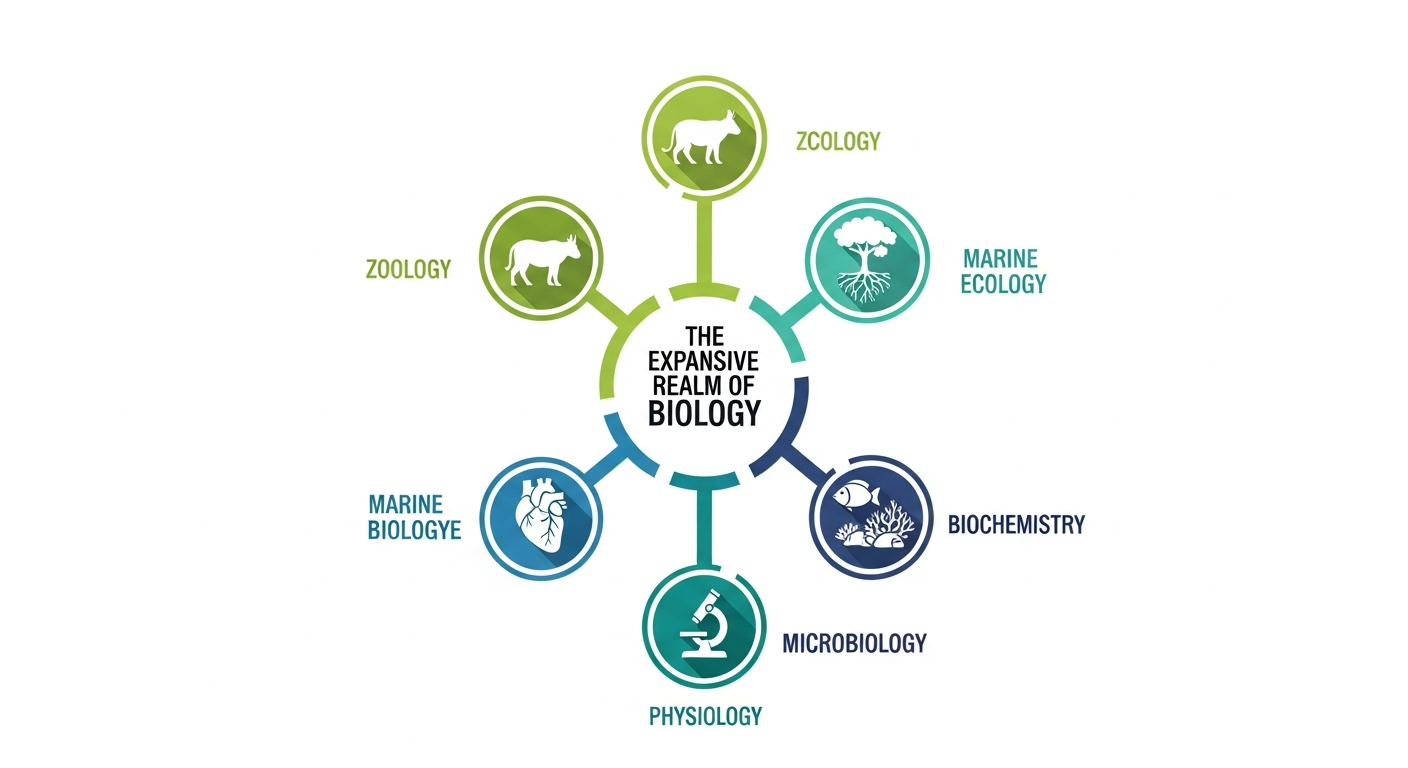 Biology is a vast field with numerous specializations, each offering a unique lens to study the living world.
The term “Biology” encompasses a vast array of disciplines dedicated to the study of life. From the microscopic intricacies of cells to the grand scope of entire ecosystems, life science careers offer a breadth of exploration unmatched in many fields. This expansive domain includes specialized areas like zoology, the study of animals; ecology, which examines the interactions between organisms and their environments; marine biology, focusing on aquatic life; physiology, investigating the functions of living organisms; microbiology, dedicated to microorganisms; and biochemistry, exploring the chemical processes within living systems. Each of these sub-disciplines represents a unique lens through which to view and understand the living world, providing fertile ground for dedicated professionals. The journey into biological sciences is not a narrow path but a sprawling landscape of interconnected inquiries.
Why “Making the Most” Matters: Cultivating Impact and Personal Fulfillment
In any profession, “making the most” transcends mere job acquisition; it signifies achieving a state of significant contribution, continuous growth, and profound personal satisfaction. For a biologist, this means not only advancing scientific knowledge through meticulous research and rigorous experiments but also translating that knowledge into tangible benefits for society. It involves finding a niche that aligns with personal passions, developing a robust skill set that remains relevant, and actively shaping one’s career trajectory. By prioritizing impact and fulfillment, a biologist can transform a profession into a lifelong pursuit of discovery and meaningful engagement with the natural world. This proactive approach ensures a career that is both professionally rewarding and personally enriching.
Building a Resilient Foundation: Education and Strategic Specialization
The bedrock of any successful career in biology is a solid educational foundation, coupled with a discerning approach to specialization. The field is too broad to master comprehensively, making strategic choices early on crucial for long-term success.
Laying the Academic Groundwork: From Core Biology to Advanced Degrees
A strong undergraduate education in Biology or a related biological science is the indispensable starting point. This foundational period introduces students to core concepts, laboratory techniques, and the scientific method, preparing them to conduct initial research. For many roles, particularly those involving independent research, drug discovery, or advanced diagnostics, a Master’s or Doctoral degree is essential. Pursuing advanced degrees allows for deeper immersion in specific areas, refining experimental design, and contributing novel findings to the scientific community. These higher degrees are often prerequisites for leading research projects and securing positions in academia or cutting-edge industrial settings.
Identifying and Cultivating Your Niche: The Power of Specialization
The vastness of biology necessitates specialization. Whether drawn to the intricate world of genetics, the complex behaviors of species in zoology, the challenges of marine biology, the functional insights of physiology, the unseen world of microbiology, or the molecular mechanisms of biochemistry, choosing a niche allows for focused development of expertise. Specialization enables a biologist to become a go-to expert in a particular domain, making them invaluable to research teams and organizations. It also provides a clearer direction for professional development and networking, helping to forge connections within specific scientific communities.
Mastering Essential Skills for the Modern Biologist
Beyond academic credentials, a diverse skill set is paramount for thriving in the dynamic landscape of biological science careers. These skills can be broadly categorized into scientific proficiencies, digital competencies, and crucial interpersonal abilities.
Core Scientific and Technical Proficiencies
At the heart of a biologist’s toolkit are robust scientific and technical skills. This includes a deep understanding of research methodologies, the ability to design and conduct meticulous experiments, and proficiency in various laboratory techniques. Expertise in data analysis, interpretation of results, and meticulous record-keeping are non-negotiable. Whether studying the behavior of living organisms or the function of cells, precision and a keen eye for detail are fundamental to generating reliable scientific insights.
The Rise of Digital and Computational Biology Skills
The modern era of biology is increasingly shaped by computational power and digital tools. Proficiency in bioinformatics, data science, and computational biology is no longer optional but a significant advantage. The ability to analyze large biological datasets, utilize programming languages for data manipulation, and understand statistical modeling is critical for advancing research in areas like genomics, proteomics, and systems biology. This convergence of biological science with computer science opens new avenues for discovery and innovation.
“Soft Skills” as Superpowers: Accelerating Your Career Growth
Often underestimated, “soft skills” are powerful accelerators for a biology career. Effective communication, both written and verbal, is vital for disseminating research findings, collaborating with colleagues, and securing funding. Critical thinking and problem-solving skills enable biologists to tackle complex scientific challenges. Teamwork and collaboration are essential in laboratory settings and interdisciplinary projects, allowing for the pooling of diverse expertise. Adaptability and resilience are crucial for navigating the inevitable setbacks inherent in research and for staying relevant in a rapidly evolving scientific landscape.
Strategic Networking and Building a Powerful Professional Brand
In a field driven by collaboration and shared knowledge, strategic networking and a well-defined professional brand are indispensable for career advancement and impact.
Cultivating a Robust Professional Network
Building and nurturing a professional network provides access to mentors, collaborators, and career opportunities. Engaging with peers at conferences, joining professional organizations such as those focused on microbiology or ecological societies, and actively participating in online scientific communities are excellent ways to expand one’s network. These connections offer invaluable insights into emerging research, potential job openings, and collaborative ventures that can propel a biologist’s career forward, extending beyond traditional laboratory work.
Establishing Your Expert Identity and Reputation
A strong professional brand is built on consistent performance, clear communication of expertise, and a proactive approach to sharing knowledge. This can involve presenting research at scientific meetings, publishing findings in reputable journals, or contributing to scientific discourse through blogs or social media platforms. By establishing yourself as a knowledgeable and reliable voice in your chosen specialization, whether in medical research, genetics, or zoology, you enhance your visibility and attract opportunities for growth and leadership.
Continuous Learning and Adapting to an Evolving Scientific Landscape
The pace of scientific discovery in biology is relentless. To make the most of a career, a commitment to lifelong learning and adaptability is essential.
Lifelong Learning: Staying Relevant in a Dynamic Field
The landscape of biological sciences is in constant flux, with new technologies, methodologies, and discoveries emerging regularly. Biologists must actively engage in continuous learning through professional development courses, workshops, and by staying abreast of the latest literature. This dedication ensures that one’s skills and knowledge remain current, allowing for sustained contribution and relevance in areas ranging from cellular biology to ecological conservation.
Embracing Interdisciplinary and Cross-Sector Opportunities
Many of the most significant advancements in biology today occur at the intersection of disciplines. Embracing opportunities that bridge biology with fields like computer science, engineering, public health, or even business can lead to innovative solutions and exciting career paths. Moving beyond a single discipline or traditional laboratory setting can open doors to roles in biotech startups, science policy, environmental consulting, or medical device development, broadening impact and professional scope.
Exploring Diverse and High-Impact Career Pathways
The traditional image of a biologist confined to a laboratory is rapidly being replaced by a more dynamic and diverse professional landscape, offering numerous avenues for impact.
Beyond Academia and the Traditional Lab Setting
While academic research and traditional laboratory roles remain vital, opportunities abound in sectors such as biotechnology, pharmaceuticals, environmental consulting, conservation organizations, forensic science, and science communication. These roles often leverage core biological knowledge in applied settings, addressing pressing societal needs from developing new medical treatments to protecting endangered species.
Emerging Fields and Their Transformative Potential
New frontiers in biology, such as synthetic biology, gene editing technologies like CRISPR, personalized medicine, and advanced computational modeling, are creating exciting and high-impact career opportunities. These fields require a blend of deep biological understanding and innovative thinking, offering the chance to be at the forefront of scientific progress and to shape the future of life sciences.
Entrepreneurship and Innovation in Biology
For biologists with an innovative spirit, entrepreneurship offers a powerful path to impact. Developing novel diagnostic tools, creating sustainable biotechnological solutions, or founding companies that address unmet needs in healthcare or environmental management can be incredibly rewarding. This path requires not only scientific acumen but also business acumen, risk-taking, and a vision for translating scientific breakthroughs into practical applications.
Advancing and Leading in Your Biology Career
Moving beyond entry-level positions requires a strategic approach to leadership, influence, and global collaboration.
Pathways to Leadership and Management Roles
Advancing into leadership roles, whether managing research teams, overseeing laboratory operations, or heading departments, requires developing managerial skills alongside scientific expertise. This often involves effective project management, resource allocation, and fostering a collaborative and productive team environment. Demonstrating leadership potential early on is key to unlocking these opportunities.
Becoming a Thought Leader and Influencer
Beyond management, becoming a thought leader involves shaping the discourse within your field. This can be achieved through groundbreaking research, influential publications, speaking engagements, or active participation in shaping scientific policy. By consistently contributing valuable insights and guiding the direction of research, a biologist can establish a reputation as an influential figure.
Global Opportunities and Collaborative Ventures
Biology is an inherently global science. Engaging in international research collaborations, participating in global health initiatives, or contributing to conservation efforts across borders allows biologists to expand their impact and gain diverse perspectives. These ventures often lead to unique professional experiences and foster a deeper understanding of the worldwide challenges that biological science can address.
Maximizing Your Value: Compensation, Satisfaction, and Sustainability
To truly make the most of a career in biology, it’s crucial to consider not only professional growth and impact but also personal satisfaction and financial well-being.
Understanding Your Market Value and Negotiating for Success
As expertise and experience grow, so too does an individual’s market value. Understanding salary benchmarks for specific roles and specializations, whether in industry, academia, or government, is essential for successful career progression. Developing strong negotiation skills allows biologists to secure fair compensation that reflects their contributions and ensures financial sustainability.
Cultivating Career Satisfaction and Work-Life Integration
Long-term career success is intrinsically linked to job satisfaction and a healthy work-life balance. Identifying roles and work environments that align with personal values and interests is paramount. Strategies for effective time management, setting boundaries, and prioritizing well-being can prevent burnout and foster sustained engagement and passion for the field, making the career journey both productive and enjoyable.
Confused?
Clear Your Career Confusion With Our Expert Counsellor
Conclusion: Your Enduring Impact in Biology
A career in biology is a journey of continuous discovery, innovation, and the profound opportunity to understand and positively influence the living world. To truly make the most of this dynamic field, one must move beyond the mere acquisition of knowledge and skills to embrace a strategic, adaptable, and impact-driven approach.
Key Strategies for a Thriving and Impactful Career
The path to maximizing your career in biology is multifaceted. It begins with a robust educational foundation and strategic specialization, delving into areas like genetics, microbiology, or marine biology. Cultivating a diverse skill set, encompassing core scientific proficiencies, digital competencies, and essential “soft skills,” is paramount. Equally critical is the proactive development of a professional network and a strong personal brand, which unlock opportunities and foster collaboration. Embracing lifelong learning and adaptability ensures relevance in the ever-evolving landscape of biological sciences, while exploring interdisciplinary and cross-sector pathways can lead to novel and high-impact contributions. From advancing research in physiology or biochemistry to driving innovation in emerging fields, the potential for a biologist to shape the future is immense. Finally, understanding your market value and prioritizing career satisfaction and work-life integration are key to sustaining a long, fulfilling, and impactful career. By consciously applying these strategies, any biologist can forge a path that is not only professionally successful but also personally rewarding, leaving an enduring mark on the world.